

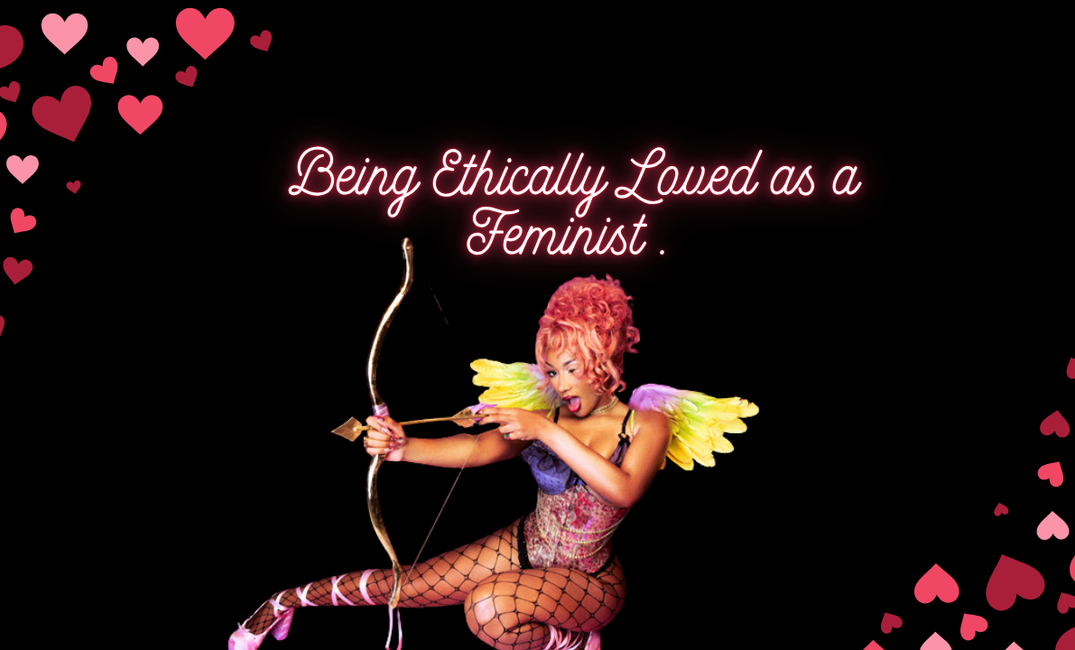
A new morning and like every other one, I open Instagram before my brain can even process what the day is asking me to do. The modern-day town criers, otherwise known as influencers, flooded my feed with news of Meghan Thee Stallion breaking up with Klay Thompson. Apparently, she changed her entire self to be with him, and apparently, he cheated on her – because or despite? We’ll never know.
One thing was becoming clear: women in love have a bad reputation of being total and complete lover girls, and loving sincerely is being labeled as cringe. There seemed to be a shroud of embarrassment around it, and suddenly, thoughts of renewing my membership in the I hate my boyfriend club were all I could think about. Loving but from a distance or disdain is now rewarded. Because if you are not in the hating boyfriend club, then aren’t you a trad wife? The sincerity of love has seemingly left the building, faster than your last situationship vanishing after the best date of your life.
I know this because I am trying to locate myself on this spectrum, too. On my journey to locate myself, I am being hand-held by my crushing fear of being perceived when I am in love with someone. What do you mean you want to take a minute to look at the color of my eyes because you want to remember it? But what is being loved if not being seen? Being seen for all of you? I don’t think I will ever be ready for that kind of exposure. I don’t think my tiny, fragile heart can handle it. Yet I feel like I am on the receiving end of it, tasked to find out what to do with all of it.
Being in love feels easier because it allows me to disappear into observation instead of exposure. It also feels like an obsessive compulsion to know everything there is to know about them. I ask them questions about their most recent favorite biryani place to order from. I get into conversations about how they see reflections of their mother in themselves. Then why can I not stand the idea of someone else loving me the same way? Like teaching them ways to care for me feels like a Sisyphean task. Why does it feel like they’ll yawn at the first sight of a mundane detail I share with them? Why is the idea of being loved so unbearable? I think it has to do with the idea of being perceived as a whole person. I know and understand my reasons. But will they?
I sit at a coffee shop and think about love. I look at myself, and I see that I want to be seen. From the way I dress myself and the way I hold my cigarette, I scream to be noticed. My desired audience, though? I and maybe some strangers who catch glimpses of me. I want to appear as a beautiful person who seems to be dedicatedly typing away at her laptop. But the minute I feel like a person will see me more than what I want them to see, I feel my throat closing. I feel like my body will combust, and I will take the whole place down with me.
What feels certain is that love feels safe when directed outwards because it gives me control of the narrative. It protects me from the vulnerability of being truly known. But after endless first dates and fleeting connections, I cannot help but wonder if we have all become so accustomed to preparing for heartbreak that being genuinely loved now feels unbearable.
I turn to pop music to see if I can find some answers to my plethora of enquiries. I instantly noticed different emotional archetypes emerging in the music I consumed. I see Olivia Rodrigo singing about the betrayal of being cheated by someone she loved intensely, while I hear Hozier singing about yearning for a love that feels eternal. As I sampled more music to understand love, I started seeing a trend emerging. Longing has now embedded itself in the culture of dating, while mutual vulnerability feels destabilizing. Cringe. It feels manufactured by capitalism because it leaves us wanting more. More of something that feels seemingly so out of reach that we keep buying into the next new thing that will help us find love.
This realization takes me back to a time when I was seeing a man who was a textbook love bomber. He loved the idea of loving someone, but ran at the first sight of intimacy. He loved the performance of loving, the gentle cleaning of my bags, the dropping everything and running to me just because he missed me, and slipping the L word into conversation way too early. But whenever I showed genuine interest in him or his life, he ran faster than I could finish my thoughts. This is not an isolated incident. I can think of five more situationships that I found myself in before and after him. And this is the case for so many people out there. Performance is being seen as the ultimate act of love, while intimacy is being shoved away from the stage.
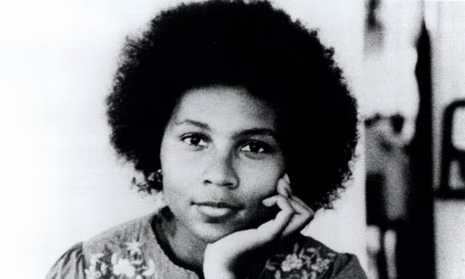
Love now feels like an action word that you only do to others, but cannot allow others to do to you. Bell Hooks writes about love as a practice rather than merely a feeling, and I wonder if part of the problem is that my generation has become fluent in feeling desire but illiterate in practicing intimacy. You can ask people what they think of intimacy, and their answers are largely going to be around physical desires. But what about the intimacy of knowing exactly how much food I’ll want to eat after I am very drunk? Or being patient with me as I navigate my life while they have theirs somewhat figured out? That cannot be performed; it comes from practice, and as a receiver, it has to be earned.
Meghan’s case with Klay isn’t an isolated incident of a baddie losing her mind over a man who doesn’t even deserve a minute of her time. We are now at a point where women are applauded for being emotionally regressive. Because cases like Meghan’s loom over our heads as cautionary tales. But why does loving a man openly feel like conservative propaganda? Have the conservatives capitalized on sincerity as a form of weakness? Is there no saving grace?
What does it mean for me, a woman, who is building independence, political consciousness, and selfhood, to participate in vulnerable romantic love without feeling consumed by patriarchal expectations? Can I not experience love without hating my boyfriend or completely submitting to him? Maybe we cannot choose who we love, but we do choose how we love them and how we allow ourselves to be loved in return. It takes practice to let go of performance and choose care over dominance, but does embracing love also mean embracing domesticity?
I find myself on shaky grounds as a girlfriend. I have spent the best part of my teenage and twenties becoming who I am, and being emotionally dependent on a kind and supportive man feels crippling. Yet I find myself in conversations with him, feeling seen and understood. Does that now put me in the trad-wife pipeline? Is emotional dependency on my heterosexual romantic partner anti-feminist? But most importantly, can love exist for women like me without the annihilation of selfhood?
I want to believe it can. I like being held when I am falling asleep just as much as I like being by myself. I want to be told that I look beautiful just as much as I love dressing up for myself. I want this to co-exist like children engaging in parallel play, instead I keep finding them packaged as paradoxes that I cannot seem to get rid of. It seems like a place where love seems to need ethical foundations. Not to restrict it, but to build it as a practice. Only then can love grow on me.
If we were opening a love shop to get into the business of practicing ethical love, the first order of the business would be emotional responsibility. Not just for the other person, but also for yourself. As a person experiencing life, it is only human to feel emotions that can be intense and overwhelming. But not everything you feel needs to be out in the open. There needs to be more trust in the idea of loving ethically, I think, has to begin with being honest with yourself. I remember when I was first falling in love, I doubted everything about the way I moved through it. Every text message felt like it needed committee approval. Every emotion had to be cross-examined with my friends before I could trust it as real. I kept searching for a correct way to love someone, as if intimacy came with a universal script everyone else had somehow memorized before me. It took months of actively checking in with myself to understand that the way I want to love and be loved cannot look exactly like my friends’ relationships or even the ideas of romance I grew up consuming.
I like to believe all of us carry a small voice within ourselves that already knows what feels right, but hearing it takes practice. Not in the dramatic sense of trying to hear an echo across the Alps, but in the quieter act of embracing certainty. Not complete certainty, because I do not think anyone ever fully arrives there, but enough certainty to know yourself in approximation. Enough certainty to recognize what tenderness feels like when it enters your life.
Maybe that certainty comes with age, but I think it also comes from spending time with yourself outside the performance of being desired. In The Art of Loving, Erich Fromme writes that in order to love someone well, you must also learn how to become an interesting person. As a woman, parts of his work feel deeply tied to a masculine imagination of fulfillment, but there is still something useful in what he is trying to say. A life built only around romantic pursuit leaves very little room for selfhood. Loving ethically perhaps also means building a life that remains your own. A life filled with hobbies, rituals, friendships, interests, and small devotions that exist beyond another person’s ability to choose you.
I see a light at the end of this tunnel. I see that loving ethically is, at the end of the day, loving the way you want to and not the way you should – a skill set that can only be earned from loving, if not all, at the very least some parts of yourself. Maybe that, as a practice, is what feels so lacking. The preservation of the self before committing to the preservation of intimacy.
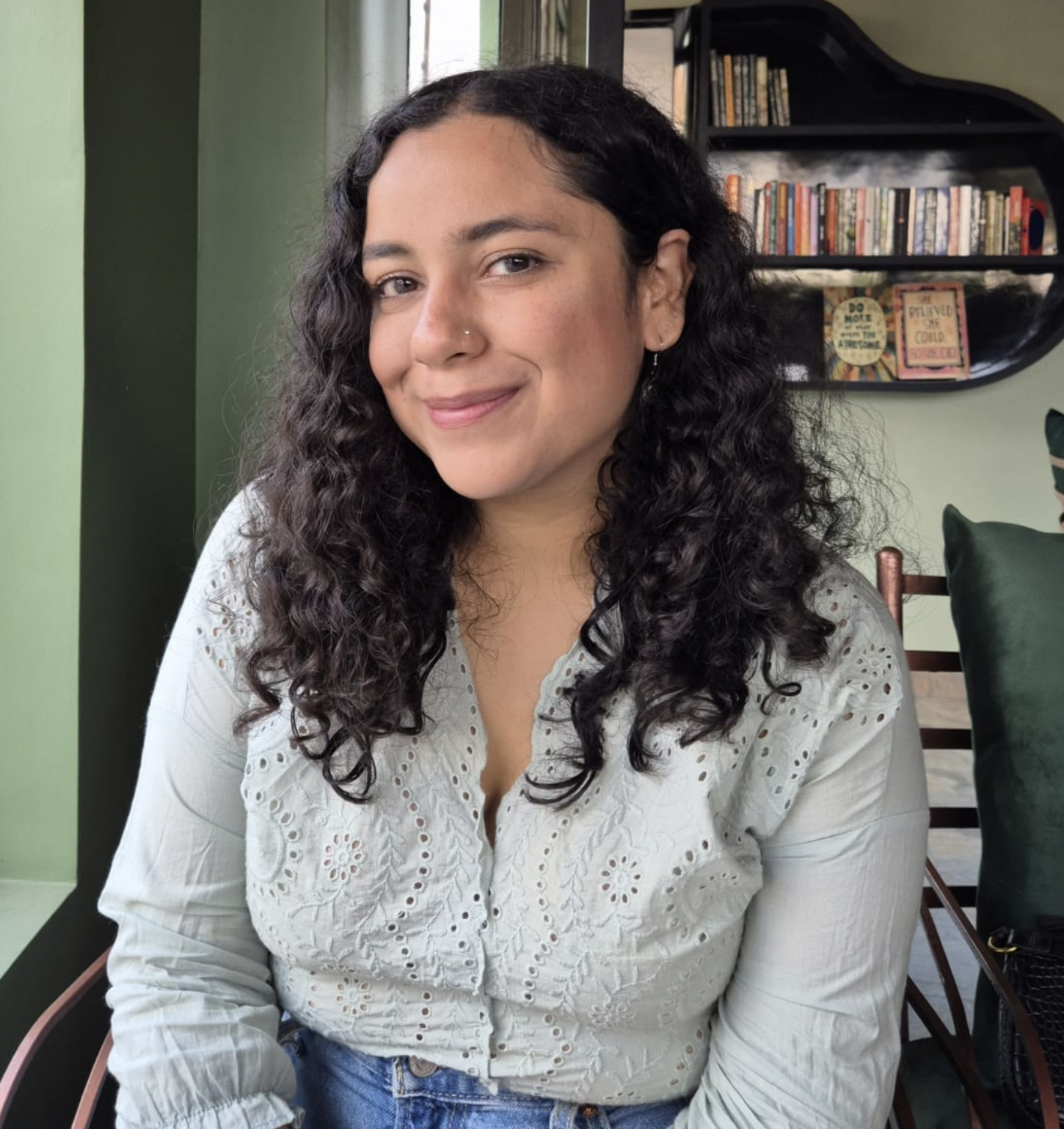
About the author : Simoni Agarwal (she/her) is a psychologist and researcher based in Kathmandu, Nepal. She earned her Postgraduate degree from TISS, Mumbai. She has a myriad of interests and is passionate about social causes, particularly in the domain of political and feminist issues. In her free time, she co-runs a book club and finds joy in consuming various forms of media. She is perpetually curious about everything, which often translates into her work.
Support the author :
We're an independent magazine that is finding its footing and here's how you can help- Shatter the illusion of capitalism with one contribution at a time and consider supporting this writer who made you laugh/cry directly : simoni2402@okhdfcbank
Comments